📖 The Silence of the Tundra
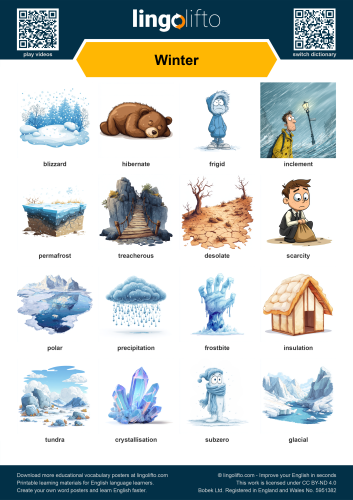
The polar night stretched endlessly across the tundra, a vast and desolate expanse where even the wind seemed reluctant to speak. Snow drifted across the ground, piling over layers of permafrost that had lain untouched for centuries. In such a place, survival was a fragile game, tested daily by frigid air and inclement storms.
One evening, a sudden blizzard descended without warning. Its force was brutal, carrying sheets of white that blinded travellers and buried paths within minutes. The precipitation thickened until the land disappeared altogether, the tundra becoming an endless swirl of ice and shadow. To move forward was treacherous, yet to stand still meant certain death.
Inside a small research outpost, Dr. Harold Bennett pressed his hand against the frosted window. He had come to study the slow crystallisation of ice in the soil, documenting how the glacial environment shaped the land. But tonight, his instruments were useless. The storm howled, rattling the walls, and his only concern was survival. He checked the insulation around the cabin, adjusting it where the cold seeped through. Without proper insulation, the subzero temperatures would claim him before dawn.
Food, too, was scarce. A harsh scarcity of supplies meant rationing every biscuit, every sip of water melted from ice. Outside, animals had long since chosen to hibernate, escaping the endless winter in burrows beneath the permafrost. Harold envied them, their instinctive retreat from the inclement weather. For humans, however, there was no such relief.
The storm raged for days. At one point Harold attempted to venture out, but the path was slick and treacherous. The blizzard forced him back almost immediately, and in that brief exposure he nearly suffered frostbite, the biting pain lingering in his fingertips. Frostbite was a constant threat here, a punishment for underestimating the glacial winds.
When the storm finally weakened, the land remained eerily still. Snowbanks rose higher than the hut itself, and the horizon seemed like a wall of white. The desolate silence pressed down, broken only by the faint cracking of ice—a reminder of the continuing crystallisation deep within the frozen earth.
Harold noted in his journal how the polar conditions dictated life here: the precipitation shaping rivers that lay hidden beneath ice, the permafrost storing secrets of ancient climates, the scarcity of resources pushing both man and beast to their limits. He wrote about how the frigid winds seemed endless, how the glacial plains swallowed sound, and how the tundra demanded respect in ways civilisation could barely understand.
Though exhausted, he realised he had witnessed something profound. In the face of inclement weather, of subzero dangers and treacherous ground, life still clung on. The animals that chose to hibernate would one day rise, the land would continue its cycle of crystallisation, and he, if careful, might endure as well.
The tundra, silent and eternal, had taught him humility.