📖 Beyond the Celestial Silence
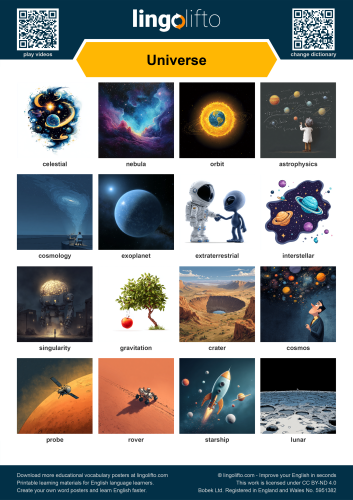
Dr Edward Hale had devoted his life to astrophysics and cosmology, believing that the cosmos still held truths no human mind had fully grasped. As he stood aboard the Aurora, a vast starship designed for interstellar travel, he gazed at a glowing nebula that shimmered with celestial light. The nebula marked the edge of a region where theories of astrophysics and cosmology were about to be tested.
The mission was ambitious: to study an exoplanet locked in a distant orbit around a dying star. This exoplanet had unusual readings of gravitation, suggesting the presence of a singularity beneath its surface. Such a singularity challenged everything Edward understood about gravitation and the structure of the cosmos.
As the starship adjusted its orbit, a small probe was launched. The probe drifted silently, its sensors tuned to detect extraterrestrial signals. Though no extraterrestrial life had yet been confirmed, the celestial patterns around the planet hinted at intelligence shaped by interstellar forces.
Upon reaching the planet’s lunar moon, the crew deployed a rover. The rover rolled slowly across a vast crater, its wheels crunching over ancient dust. Every crater told a story of collisions in the cosmos, frozen records of violent creation. The rover sent images back to the starship, revealing strange mineral spirals influenced by the moon’s gravitation.
Edward studied the data, noting how the moon’s lunar surface distorted the nearby orbit of debris. The readings suggested that the singularity below the crater was affecting space itself. This discovery could reshape cosmology and redefine how astrophysics explained matter and time.
Meanwhile, the probe detected faint pulses—possibly extraterrestrial in origin—echoing through the interstellar void. These signals passed through the glowing nebula, bending under unseen gravitation. Edward felt a quiet awe, sensing that the cosmos was responding to their presence.
As the starship prepared to leave, Edward looked once more at the exoplanet and its fragile lunar companion. The celestial dance of orbit, gravitation, and light reminded him why he had chosen astrophysics in the first place. Somewhere between the nebula, the singularity, and the silent rover in the crater, humanity had taken one more step into the infinite cosmos.
The journey was far from over. In the endless interstellar dark, the starship turned homeward, carrying discoveries that would transform cosmology—and perhaps reveal that extraterrestrial life was not a question of if, but when.